
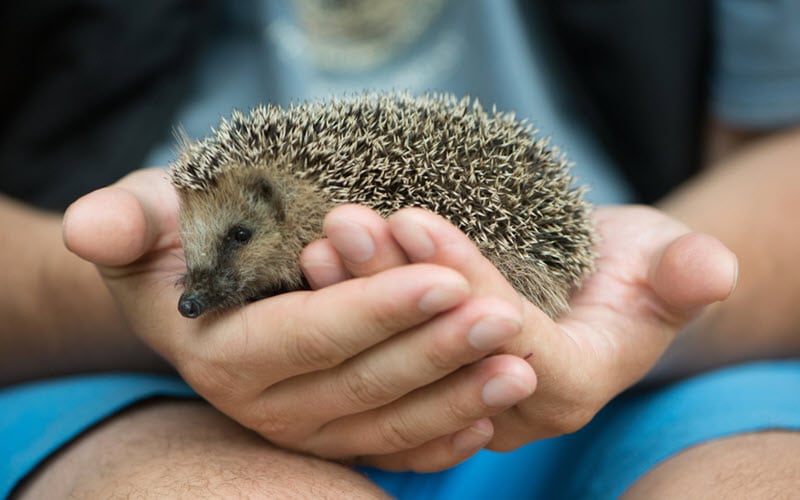
Bathe a pet hedgehog only when needed, at most every four to six weeks, in two to three centimeters of body-warm water at 95 to 100 degrees Fahrenheit. Use unscented baby or oatmeal shampoo, clean quills with a soft toothbrush, rinse thoroughly, and dry on a pre-warmed towel for 20 to 30 minutes. Trim nails monthly with baby clippers.
Why bathing advice for hedgehogs is different from dog or cat advice
Hedgehogs are small insectivores with a dense coat of keratin spines and a thermoregulation profile that makes water exposure genuinely risky, not cosmetic (the broader species tradeoff sits in hedgehog as a pet). Weekly dog-style bathing strips the skin oils that keep the animal’s ventrum soft, and even a modest post-bath chill can tip a pet hedgehog toward attempted torpor, which Merck describes as an unhealthy state when hedgehogs become too cool or too warm (https://www.merckvetmanual.com/exotic-and-laboratory-animals/hedgehogs/management-of-hedgehogs). The University of Florida College of Veterinary Medicine states plainly that “you do not need to give your hedgie a bath unless he gets really dirty,” adding that hedgehogs otherwise keep themselves clean (https://smallanimal.vethospital.ufl.edu/clinical-services/zoological-medicine/how-to-care-for-your-pet-hedgehog/). Bathing is a targeted intervention, not a recurring hygiene routine.
From a rescue-intake perspective, the most common bathing-related welfare issue we log in first-year owners is over-bathing. A new hedgehog gets bathed weekly, develops flaky dorsum and cracked ventral skin within a month, and the vet visit looks like mites or ringworm but is husbandry-driven xerosis. Merck’s diseases chapter lists “dry skin from inappropriate husbandry” as a differential for pinnal dermatitis (https://www.merckvetmanual.com/exotic-and-laboratory-animals/hedgehogs/diseases-of-hedgehogs). Before reaching for the tub, confirm what the animal actually needs against the hedgehog care guide hub.
How often to bathe: every four to six weeks at most, and often much less
The welfare-honest bathing frequency is every four to six weeks at most, and often less. Adult hedgehogs on clean fleece bedding with routine spot-cleaning often go two or three months between full baths with no hygiene issue. Weekly bathing strips protective skin oils and is the single biggest driver of owner-reported husbandry-related dry skin.
When to bathe (each trigger is a reason, not a schedule):
- Visibly dirty: poop-boots after a nocturnal wheel session, food crusted into ventral fur, substrate matted in the axillae.
- Post-medical handling, once the animal is fully recovered and warm.
- Anointing residue from a strongly staining substance a spot-clean cannot remove.
- Mites or ringworm, vet-directed only.
- Exercise mess where the animal picked up dust, lint, or pet hair a dry wipe cannot shift.
When NOT to bathe:
- Active quilling period. Young hedgehogs shed “nest spines” at around one month and replace them with permanent spines thereafter per LafeberVet (https://lafeber.com/vet/basic-information-for-hedgehogs/). Erupting follicles are tender; bath water and toothbrush pressure hurt.
- Fresh illness or post-stress. An animal recently transitioned to a new home, recovering from respiratory infection, or stressed by a vet visit in the past 48 hours needs its energy for healing.
- Cold ambient. If the room is below the 72 to 90 degree Fahrenheit band Merck specifies, fix the ambient first. Bathing a cold hedgehog risks the thermoregulatory stress described in the hedgehog hibernation and torpor guide.
- Within an hour of feeding.
Experienced keepers we work with treat a bath as a once-in-six-weeks event at most for a clean, fleece-housed adult. If the animal keeps getting dirty enough to need weekly intervention, the fix is usually cage hygiene rather than more baths; the hedgehog cage setup guide covers the substrate and cleaning cadence that resolves the symptom upstream.
Water temperature: 95 to 100 degrees Fahrenheit, body-warm, test on your inner wrist
Bath water should sit at 95 to 100 degrees Fahrenheit (roughly 35 to 38 degrees Celsius), body-warm to the inner wrist and matched to the mid-upper end of the ambient band Merck specifies for captive hedgehogs. Hotter risks heat stress and thermal skin damage; cooler risks the torpid state Merck warns can occur when hedgehogs become too cool.
Fill the basin to the planned depth and press your inner wrist against the water for five seconds. It should feel warm but not hot, like lukewarm human bathwater. If your wrist pulls back, the water is too hot.
Water temperature drifts quickly, especially in a ceramic sink that conducts heat into cool countertops. A common trigger for post-bath chill is the keeper stepping away for shampoo and returning to water that has dropped four or five degrees. Fill the basin immediately before putting the hedgehog in, check mid-session, and top up with a small warm-water pour if needed, away from the face. Rinse water must match bath water; a cool rinse is the fastest route to a chilled hedgehog.
Water depth: two to three centimeters, shallow enough to stand without swimming
Water depth should be two to three centimeters, enough to cover the feet and lap the lower belly while the hedgehog stands flat in the basin. Hedgehogs swim briefly but poorly with high water-panic potential, and water deep enough to require paddling creates a real aspiration and stress risk. The species walks with “ventrum raised off the ground” normally, so in a shallow bath the belly fur just lightly touches the water surface while the animal stands naturally. If the belly is submerged, the depth is wrong.
A kitchen sink ankle-deep on a human hand is roughly right for an average adult; for smaller hogs under 400 grams, reduce to around two centimeters. A clean sink basin, a shallow plastic tub, or a small roasting pan with a non-slip mat all work. Never use a deep tub, never fill to the shoulders, and never turn away for a moment. A panicked hedgehog can aspirate a mouthful in under a second.
Soap choice: unscented baby shampoo, hedgehog-specific oatmeal, aloe-free
The right soap is either unscented baby shampoo (a gentle Johnson’s formulation or equivalent) or an oatmeal-based hedgehog-specific shampoo, used sparingly and rinsed thoroughly. A pea-sized drop diluted in a small cup of bath water is enough for a whole-body wash. Hedgehog-specific oatmeal shampoos widely stocked in the keeper community (Super Pet and Kaytee oatmeal formulas are common examples) are interchangeable with unscented baby shampoo for routine baths. Merck’s diseases chapter separately lists enilconazole and clotrimazole as topical antifungals “in spray or shampoo formulations” for dermatophytosis (https://www.merckvetmanual.com/exotic-and-laboratory-animals/hedgehogs/diseases-of-hedgehogs); those are vet-directed, not general cleaning products.
Aloe is not considered safe for hedgehogs by keeper-community consensus reinforced through welfare groups, because ingestion risk is real on a species that licks water off its feet and spines. Check ingredient lists; if a dry-skin product contains aloe, swap for a plain oatmeal-only option and consult a vet before any topical.
Avoid human anti-dandruff shampoos (zinc pyrithione, selenium sulfide, ketoconazole at human concentrations), medicated shampoos without a prescription, and essential oils including tea tree, lavender, eucalyptus, and citrus (all toxic or unsafe for small mammals at routine concentrations). Self-treating presumed mites with an over-the-counter antifungal wastes time while Caparinia tripilis progresses, and the hedgehog health problems overview covers vet-trigger thresholds. Strong perfumes can trigger mid-bath anointing (the lick-froth sequence covered in the hedgehog behavior guide) and leave residue on quills for days. Less is more: heavy soap with incomplete rinsing drives the same dry-skin problem many keepers try to solve with more baths.
The bath routine: toothbrush technique, rinse protocol, and the mess that comes out
The standard bath is a three-stage sequence: wet, lather with toothbrush, rinse. Total in-water time is five to ten minutes; longer pushes thermoregulation margin without adding cleanliness.
Wetting comes first. Place the hedgehog in the pre-filled shallow basin and pour warm water from a clean cup over the back and sides, keeping the face dry. Never submerge the head. Most hedgehogs will stand and walk in the water for 30 to 60 seconds while they acclimate.
Lathering comes next. Dilute the pea-sized drop of shampoo in a cup of bath water, pour over the back, and work it gently through the quills with a soft baby toothbrush. The toothbrush is the most useful tool because hedgehog quills are densely packed and hold onto crusted debris fingers cannot dislodge. Work with the grain the quills naturally lie (head to tail on the back, following the curve on the flanks) rather than against, because against-the-grain brushing pulls on the follicles. For the face, neck, and ventral fur, use a soft cloth or a dampened finger. No toothbrush near the eyes or ears.
Rinsing is the step most under-done by first-time keepers and is a major driver of flaky-skin complaints. Pour clean warm water slowly over the back and sides until the water runs clear with no visible suds, tipping the hedgehog gently forward so soapy runoff flows away from the face. Two or three full cup-pours is the minimum. Expect mess: bath water turns greyish-brown from skin shedding, substrate dust, and foot residue, and hedgehogs frequently defecate in the bath on the first dip. Change the water and finish the rinse in clean water if that happens.
Drying: warm towel, never cold air, 20 to 30 minutes of recovery before cage return
Drying is the step where most post-bath welfare problems start. The fix is a pre-warmed towel, gentle blotting, and a long warm recovery before the hedgehog returns to the cage. A soft cotton or fleece towel pre-warmed in a clothes dryer for two to three minutes on low (not hot), or laid on a heating pad on low for five minutes, gives a warm receiving surface; a second dry towel stacked under it adds insulation.
Lift the wet hedgehog onto the warm towel and wrap the sides up around the body, leaving the face clear. Blot gently rather than rubbing. Transfer to a second dry warm towel once the first is damp. Do not use a cold air source: no open windows, no AC draft, no hair dryer on cool. A hair dryer on low warm from 30 centimeters is acceptable only for confident keepers on a cooperative animal, because many hedgehogs find the noise stressful. When in doubt, skip the dryer and use more towels.
Holding the towel-wrapped hedgehog against the keeper’s chest under a fleece blanket for 15 to 20 minutes is the most effective warming method. Keep the hedgehog in this warm-recovery setup for 20 to 30 minutes minimum. The cage should already be at the correct 72 to 90 degree Fahrenheit ambient with the supplemental heat source running as described in the hedgehog temperature requirements guide. If the animal becomes cold and listless during or after the bath (stiff movement, slow response, cool to the touch), treat it as early torpor: warm on the keeper’s body under layers and contact a vet.
Nail trimming: monthly, baby nail clippers, natural light, and the quick
Hedgehog nails grow continuously and need trimming roughly monthly, though active wheel-running can slow the pace. UF CVM notes that hedgehogs “may need help with having their nails trimmed,” and Merck adds that digits “should be inspected for encircling fibers and overgrown nails.”
Tools: human baby or small cat nail clippers (the small curved blade fits a hedgehog toe), a bright light so the pink quick is visible inside the translucent nail, a helper or a bath-calm post-bath window, and cornstarch or styptic powder for accidents.
Hold the animal in a position it tolerates, either belly-up in a cupped palm or walking on a flat sink surface while feet place down naturally. Lift one foot at a time, identify the quick, position the clipper across the clear tip with a small margin, and clip. Most keepers manage two to four nails per session across multiple days rather than all 20 at once, because hedgehogs tolerate belly-up for about 30 to 60 seconds before they want to roll. A monthly one- or two-session cadence beats a quarterly marathon.
If you nick the quick, bleeding is usually minor and stops within a minute. Press cornstarch or styptic powder firmly onto the nail for 30 to 60 seconds. If bleeding does not slow, seems disproportionate, or the animal is lethargic afterward, call a vet. Nervous keepers, owners still learning to read the quick, or hedgehogs that consistently ball through attempted trims are fine candidates for professional trims at an exotic-animal clinic.
Foot soaks: the alternative to a full bath for minor foot dirt
A foot soak is the common alternative to a full bath for dirty feet on an otherwise clean body. The setup is a shallow dish at the same 95 to 100 degrees Fahrenheit as a full bath, poured to one or two centimeters, just enough to cover the pads. The animal stands for two to five minutes while warm water loosens fecal matter and substrate debris, then walks onto a warm towel to dry briefly. Foot soaks solve the biggest recurring hygiene issue (after-wheel dirty feet) without the thermoregulation load of a full bath, and skin-oil-stripping risk is near zero because the body coat stays dry. Heavy-wheel keepers often keep a foot-soak dish set up year-round, reserving full baths for the monthly-at-most schedule.
Dry skin, flaky skin, and when it is mites or ringworm instead
Mild flakiness between permanent spines is normal. Merck’s management page notes that “in the spiny areas, skin may appear slightly dry or flaky,” adding that “excessive flaking, quill loss, erythema, and crusting are abnormal.” A little flaky skin is fine; quill loss, red or scabby skin, or crusts at the quill bases is a vet visit.
For mild dry skin without quill loss, reduce bath frequency first (over-bathing is the most common cause; go to every six to eight weeks or less), try an oatmeal bath with colloidal oatmeal in a hedgehog-specific shampoo, check ambient humidity (dry indoor air from winter heating worsens flakiness; a careful humidifier often helps), and review the diet. Some keepers use a very small amount of unscented aloe-free skin product on the ventrum or around the pinnae; Avon’s Skin So Soft is a long-standing keeper-community favorite, mentioned here as community framing rather than clinical prescription. Treat any topical product as vet-check-first. Marginal fatty-acid intake can also show up as dry skin, so the hedgehog diet guide covers the insect-and-pelleted base that supports skin quality.
Merck’s diseases chapter describes mite infestation (Caparinia tripilis) as “very common” in African pygmy hedgehogs with “excessive quill loss, loose quills, hyperkeratosis, seborrhea, and white or brownish crusts (mite droppings) at the base of the quills.” Diagnosis is confirmed by skin scraping or tape impression, not appearance. Ringworm (dermatophytosis) presents as “crusting dermatitis, especially around the face and pinnae” and is confirmed by dermatophyte culture of spines. Both look similar to advanced dry skin at a glance. If flakiness comes with quill loss, crusting, redness, facial or ear involvement, or behavior changes, book an exotic-animal vet visit instead of escalating baths. During active quilling (around one month and again around sixteen weeks, per LafeberVet’s nest-spine shed timing), a transient increase in flakiness and loose spines is expected and is not dry skin.
Zoonosis and post-bath hygiene: the handwashing step that closes the loop
Hedgehogs can asymptomatically shed Salmonella, and CDC public-health guidance treats hedgehog handling as a zoonotic hygiene event. Bathing amplifies exposure: bath water concentrates the animal’s fecal and skin flora, and baths routinely include spontaneous defecation in the basin.
Wash hands thoroughly with soap and warm water immediately after every bath session (a full 20-second handwash), and the same for anyone who helped. Do not bathe hedgehogs in kitchen sinks where food is prepared; a dedicated bathroom sink or a wash-only plastic tub is safer. If a sink must be shared, disinfect it thoroughly with a surface disinfectant. Keep bath tools (toothbrush, cup, cloths) in a hedgehog-only kit; drying towels go straight to the laundry. Children, immunocompromised household members, and pregnant family members should avoid bath-water contact; the hedgehog handling guide covers the broader child-safety framework. Salmonella outbreaks linked to pet hedgehogs have prompted multi-state CDC advisories over the past decade.
The post-bath handling window and what comes next
A warmed, dried, just-bathed hedgehog is often unusually calm and receptive to short handling: a 10 to 20 minute bonding opportunity on a fleece-wrapped lap, not a first-time taming session. The relaxation fades within 30 to 60 minutes, and the window is also the easiest time for a cooperative short-session nail trim. After 20 to 30 minutes of warm recovery (body at baseline, fur dry, feet warm), return the hedgehog to its pre-warmed cage and let it settle.
Frequently asked questions
How often should I bathe my pet hedgehog?
Bathe a pet African pygmy hedgehog only when needed, at most every four to six weeks. Many adult hedgehogs on clean fleece bedding go two to three months between full baths with no hygiene issue. Weekly bathing strips protective skin oils and is the most common cause of owner-reported dry skin that turns out to be husbandry-driven. Bathe for a clear reason (visibly dirty, post-medical, anointing residue, or vet-directed medicated shampoo), not on a fixed schedule.
What temperature should hedgehog bath water be?
Hedgehog bath water should be 95 to 100 degrees Fahrenheit (roughly 35 to 38 degrees Celsius), body-warm but not hot. Test on your inner wrist before putting the hedgehog in: it should feel warm like lukewarm human bathwater. Water too hot causes heat stress; water too cold triggers thermoregulatory risk similar to a cold cage. Fill the basin immediately before bathing because water temperature drifts quickly, and keep rinse water matched to bath water.
What kind of shampoo is safe for hedgehogs?
Use either an unscented baby shampoo (a pea-sized drop diluted in a cup of bath water) or a hedgehog-specific oatmeal shampoo such as the widely stocked Super Pet or Kaytee oatmeal formulas. Avoid human anti-dandruff shampoos, medicated shampoos without a vet prescription, essential oils (especially tea tree), products containing aloe, and heavily scented human body washes. Merck lists enilconazole and clotrimazole shampoos as treatment options for confirmed dermatophytosis, but only when prescribed by a vet after a specific dermatologic diagnosis.
How do I dry a hedgehog after a bath?
Wrap the hedgehog in a pre-warmed towel and blot gently rather than rubbing, because rubbing pulls on quills. Transfer to a second dry warm towel once the first is damp, and keep the animal wrapped against the keeper’s chest for 20 to 30 minutes before returning to the cage. Avoid cold air. Many hedgehogs find hair dryers stressful, so skip the dryer and use more towels unless the animal is confirmed comfortable with the sound. The cage must already be at normal ambient temperature before the hedgehog returns.
Can I bathe my hedgehog during quilling?
Skip baths during active quilling periods. Young hedgehogs shed their nest spines at around one month of age and replace permanent spines thereafter per LafeberVet. During active replacement, the skin is tender and toothbrush pressure on erupting quills is painful. Wait until the acute shed has passed, usually a week or two, before bathing, and expect normal transient increases in flaky skin and loose quills during the phase. Spot-cleaning with a damp cloth is acceptable for small dirty areas during quilling if needed.
How do I trim my hedgehog’s nails safely?
Use human baby nail clippers or small cat clippers in good natural light and identify the pink quick through the translucent nail before clipping. Clip only the clear tip, leaving a small margin from the quick. Work two to four nails per session rather than all twenty at once, because most hedgehogs tolerate belly-up positioning for 30 to 60 seconds before they want to roll. Keep cornstarch or styptic powder on hand for accidents, and consider a post-bath session when the animal is calmest.
My hedgehog has flaky skin, is this normal or a problem?
Merck describes mild flakiness in the spiny areas as normal, but “excessive flaking, quill loss, erythema, and crusting are abnormal” and warrant a vet visit. For mild flakiness without quill loss, reduce bath frequency, try an oatmeal bath, check indoor humidity, and review the diet. If the flakiness is accompanied by quill loss, red or crusty skin at quill bases, facial or ear involvement, or behavior changes, book an exotic-animal vet appointment. Mite and ringworm infections look superficially like advanced dry skin and are confirmed only by skin scraping or culture.
Can I bathe a hedgehog in my kitchen sink?
It is safer to bathe a hedgehog in a dedicated bathroom sink or a wash-only plastic tub rather than a kitchen sink where food is prepared. Hedgehogs can asymptomatically shed Salmonella, and CDC public-health advisories have linked pet-hedgehog contact to multi-state salmonella outbreaks. Bath water routinely contains fecal matter because hedgehogs often defecate during baths. If a shared sink is unavoidable, disinfect the surface thoroughly afterward. Wash hands for a full 20 seconds with soap and warm water after every bath session.
Researched and written by the ExoPetGuides editorial team with AI-assisted drafting. All husbandry parameters and veterinary references independently verified against the Merck Veterinary Manual hedgehog management and diseases chapters (Doss DVM DACZM and Carpenter DVM DACZM), the LafeberVet Basic Information Sheet for the African pygmy hedgehog (Pollock DVM DABVP and Parmentier DVM), the University of Florida College of Veterinary Medicine Zoological Medicine hedgehog care page, CDC public-health guidance on hedgehog salmonella risk, and community-observation framing from the Hedgehog Welfare Society’s published keeper resources.
Disclaimer: This content is for educational purposes only and is not a substitute for professional veterinary advice. Always consult a qualified veterinarian — ideally an exotic-animal specialist — for any health concern about your pet. Care recommendations may vary based on species, individual animal, and local regulations.