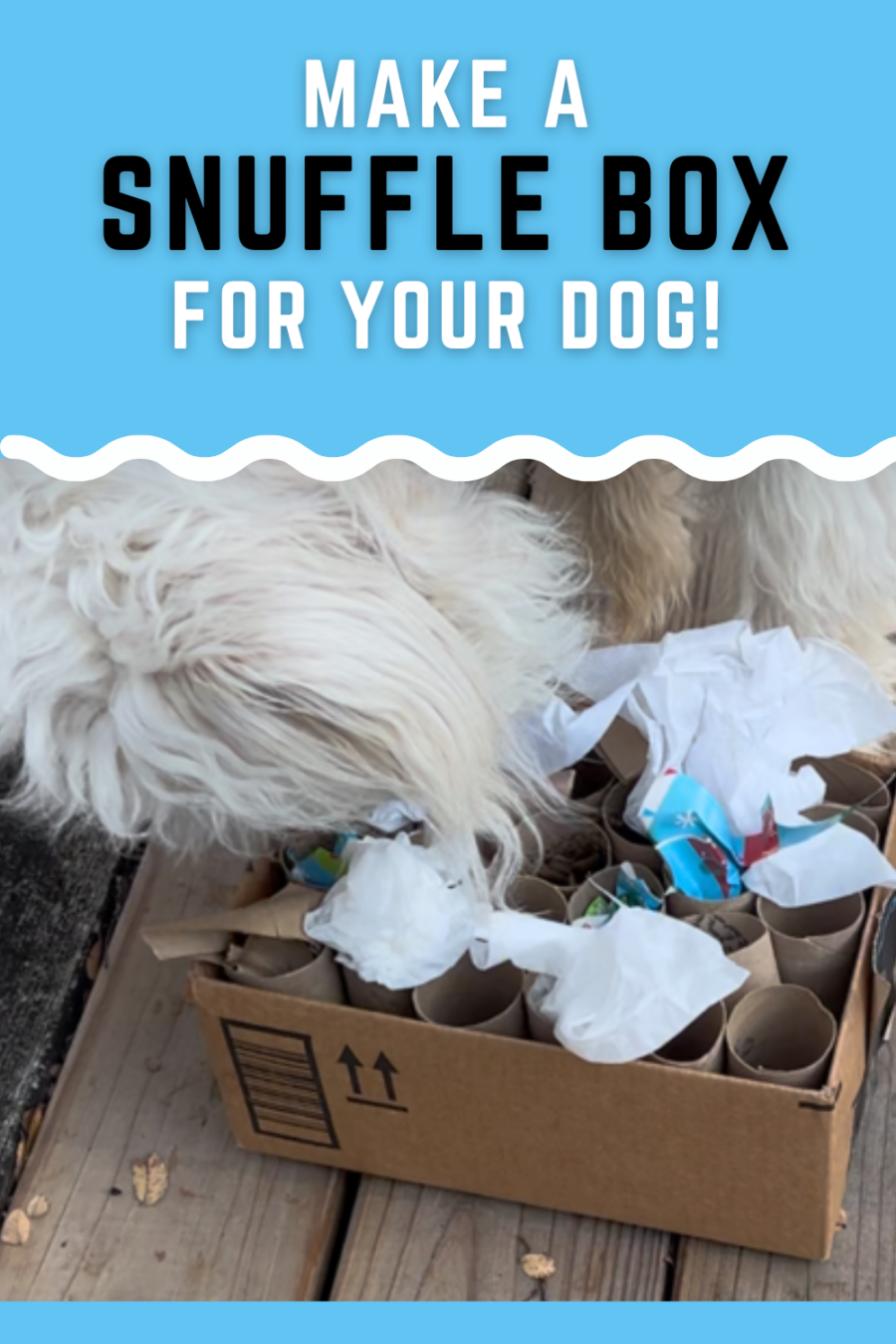
If your dog lights up at the words “Find it!” you already know how powerful scent-based enrichment can be. A snuffle box is one of the easiest ways to tap into your dog’s natural foraging instincts—using items you probably already have at home.
Like a snuffle mat, a snuffle box encourages calm sniffing, problem-solving, and slower eating. But instead of fleece strips, you’ll use safe household materials to create layers and hiding spots inside a box.
Let’s build one!
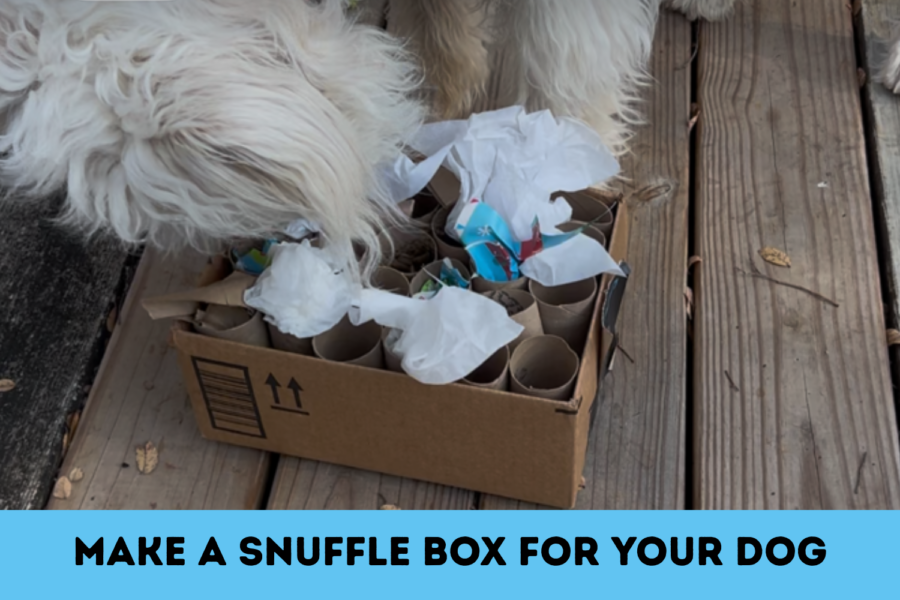
What Is a Snuffle Box?
A snuffle box is a shallow box filled with safe, dog-friendly items that allow you to hide kibble or treats. Your dog must use their nose to search, move objects, and uncover hidden food.
It’s:
- A scent game
- A slow-feeding alternative
- A rainy-day enrichment activity
- A confidence-building exercise
And it’s wonderfully adaptable for dogs of all ages.
Why Dogs Love Snuffle Boxes
Dogs are natural foragers. In the wild, canines would spend hours searching for food. In our homes, meals are often eaten in under a minute from a bowl.
A snuffle box:
- Encourages natural sniffing behavior…your dog’s superpower!
- Slows down fast eaters
- Provides mental stimulation
- Promotes calm focus
- Builds problem-solving skills
Even 10–15 minutes of focused sniffing can be mentally tiring in the best possible way.
What You’ll Need
Start simple. You can always make it more elaborate later.
- Base Container. This can be a sturdy cardboard box (check that there are no staples to cause injury), a shallow plastic storage bin or a wooden crate. Choose something low enough that your dog can easily access it.
- Filler Materials. Use soft, safe, non-toxic items for hiding the food such as rolled up towels, paper towel tubes, toilet paper inner roll, crumpled tissue or packing paper (not glossy), soft dog toys, tennis balls (if your dog doesn’t shred them), etc. You want to AVOID anything that might cause a choking hazard like plastic bags or Styrofoam.
- Dog food and treats. Be sure to measure the amount of food you are using and subtract this from your dog’s daily diet.
How to Assemble Your Snuffle Box
Step 1: Prepare the Box
Place your box in a low-distraction area. If it slides on the floor, set it on a non-slip mat. Be sure the box has no staples or anything else that could harm your dog.
Step 2: Add a Base Layer
Scatter a portion of your dog’s kibble or treats on the bottom of the box.
Step 3: Add Fillers
Layer towels, paper, and toys loosely over the food. Don’t pack it tightly — your dog should be able to move items with their nose.
Step 4: Add More Food
Scatter more kibble between layers. Think of it like building a scent lasagna: food, layer, food, layer.
Step 5: Invite Your Dog
Use a cheerful cue like “Find it!” and let your dog explore.
Stay nearby, especially the first few times, to ensure they’re interacting appropriately.
Make It Easy at First
For beginners:
- Leave some kibble visible
- Use fewer layers
- Avoid tightly packed materials
The goal is success. You want your dog to quickly understand that sniffing leads to rewards.
If your dog seems confused, gently lift a towel to show them the hidden treasure.
How to Increase Difficulty
Once your dog understands the game, you can:
- Add lightweight boxes from your recycling bin and hide some of the food inside the main box. Fold the box so the dog has to tear in to get the food. (Yes, this is a bit messy as the dog shreds the inner boxes but, remember, shredding is a very natural behavior for dogs and doing it is enriching.)
- Put dog food in the toilet paper rolls, then fold the rolls to increase the difficulty.
You can even rotate materials to keep it novel.
But remember: enrichment isn’t about making it frustrating. If your dog gives up and walks away, you’ve gone too far.
Safety and Supervision
Always supervise snuffle box sessions, particularly if your dog:
- Shreds cardboard
- Eats paper
- Guards food
- Is a strong chewer
If your dog begins eating materials, calmly remove the box and try again later with sturdier fillers or consider a different enrichment activity
For multi-dog households, offer separate boxes in separate spaces to prevent tension.
When Playtime Is Over
When playtime is over, your job is to pick up the snuffle box (and, yes, any mess that it has produced) and PUT IT AWAY.
By putting the toy away at the conclusion of play, you are telling your dog that playtime is over. These can help prevent your dog from going out and looking for other items around the house to shred. Instead, he learns that you present and then remove the snuffle box. It’s not up to him to find his own snuffle box materials around the house!
How Often Should You Use a Snuffle Box?
You can use a snuffle box as a full meal, a part of a meal or during times when you might not be able to get out for your usual walk.
Rotate enrichment activities (snuffle box, scatter feeding, puzzle feeders, lick mats, stuffed toys) to keep things interesting.
A Simple Way to Honor Your Dog’s Instincts
A snuffle box doesn’t require expensive gear or complicated training. It simply gives your dog permission to do what they were born to do: sniff, search, and solve.
In a world where dogs are often asked to be calm and patient, a snuffle box gives them something deeply satisfying — the chance to follow their nose.
And sometimes, that’s exactly what they need.
Pin it to remember