
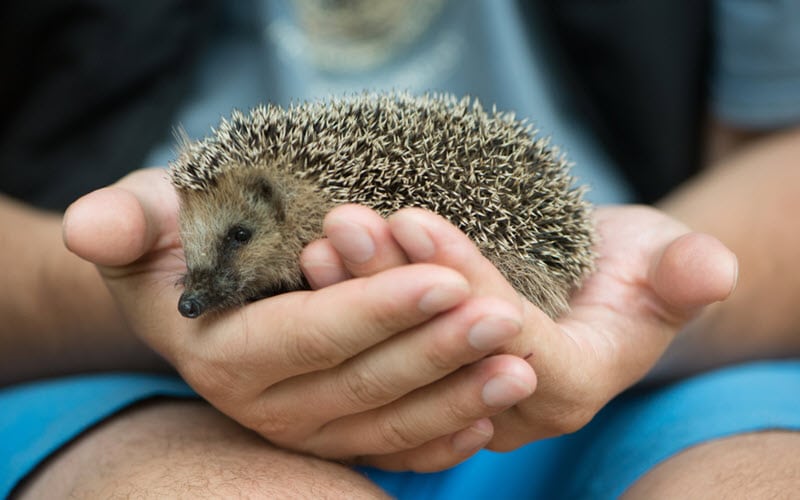
Wobbly hedgehog syndrome is a progressive, incurable neurologic disease that destroys the protective myelin sheath around nerve fibers in the brain and spinal cord of African pygmy hedgehogs. Roughly 10 percent of the North American captive population is affected. There is no treatment that stops or reverses the disease. Supportive care can maintain comfort for months, but WHS is ultimately fatal, and every owner of an affected hedgehog will face an end-of-life decision. This article covers what WHS is, how to recognize it early, what the disease course looks like, how to provide meaningful palliative care, and when to have the euthanasia conversation with your exotic vet.
What is wobbly hedgehog syndrome?
Wobbly hedgehog syndrome (WHS) is a progressive demyelinating neurodegenerative disease of captive African pygmy hedgehogs (Atelerix albiventris). “Demyelinating” means the disease attacks myelin, the fatty insulation that wraps nerve fibers and allows electrical signals to travel quickly between the brain, spinal cord, and muscles. When myelin breaks down, nerve signals slow, scramble, or fail entirely. The result is progressive loss of voluntary muscle control, starting in the hind limbs and advancing forward.
Merck Veterinary Manual classifies WHS as the most common progressive neurologic disease in this species, describing it as a “spongy myelinopathy” with bilateral, symmetrical status spongiosis of multiple CNS sites including the cerebellum, medulla oblongata, and spinal cord (source: Merck Veterinary Manual). Peripheral nerves may also be involved. Importantly, Merck notes that inflammation of the CNS is not associated with WHS, which distinguishes it from infectious encephalitis.
The disease has been documented in captive African pygmy hedgehogs since the mid-1990s and is sometimes compared to progressive forms of multiple sclerosis in humans, though the analogy is imperfect. In MS, the immune system attacks myelin; in WHS, the etiology remains unknown, though a hereditary basis is suspected (Merck Veterinary Manual). A 2023 research paper confirmed that while demyelination is accompanied by extensive remyelination attempts, the remyelination is not enough to compensate for axonal degeneration and neuronal loss, resulting in relentless progression (source: PubMed).
From a rescue-intake perspective, WHS is the single most emotionally difficult condition in pet hedgehog welfare. The animal looks normal for most of its life, the onset is subtle, the trajectory is one-directional, and the keeper’s role shifts from care provider to palliative-comfort manager over a matter of months. Understanding the disease before it appears in your animal is genuinely better than learning about it under crisis conditions.
How common is WHS?
LafeberVet reports that the incidence of WHS is approximately 10 percent in the North American captive African pygmy hedgehog population (source: LafeberVet). That number comes from retrospective studies, including work funded by the (Hedgehog Welfare Society), and represents the best available epidemiologic estimate for captive-bred animals in the US and Canada.
A 2023 retrospective published in the Journal of the American Veterinary Medical Association (JAVMA) reviewed medical records from 49 African pygmy hedgehogs with histopathologically confirmed WHS across seven US institutions over a 20-year period (2000 to 2020). Of those 49 animals, 15 (31 percent) had subclinical WHS with no reported neurologic signs before death, meaning the disease was present on postmortem examination but had not yet produced visible symptoms. This subclinical finding suggests that the true prevalence of WHS pathology may be higher than the clinical-case rate implies (Gonzalez et al., JAVMA, 2023; https://pubmed.ncbi.nlm.nih.gov/37217171/).
The practical meaning for owners: if you own a pet hedgehog, the odds of encountering WHS are roughly 1 in 10. That is high enough that every hedgehog owner should know the early signs, have a relationship with an exotic vet before symptoms appear, and have thought at least briefly about how they would manage a progressive terminal diagnosis in a small animal.
What causes WHS and is it genetic?
The etiology of WHS remains unknown. A hereditary basis is suspected but not conclusively proven. Merck states that “the etiology of WHS remains unknown, but a hereditary basis is suspected” (Merck Veterinary Manual). The suspected inheritance pattern is autosomal recessive, meaning both parents must carry the gene for offspring to be affected, but carrier animals show no symptoms and cannot be identified through clinical examination.
No validated genetic test for WHS exists as of 2026. This creates a practical problem for breeding programs: you cannot screen a breeding pair for carrier status before mating. Some breeders track WHS occurrence in their lines and retire pairs that produce affected offspring, but this retrospective approach only catches the problem after affected animals have already been sold to pet homes.
The closed breeding pool of African pygmy hedgehogs in North America concentrates the genetic risk. All US pet hedgehogs descend from a limited founder population imported decades ago, and the gene pool has not been refreshed with wild-caught animals since USDA import restrictions tightened. The genetic bottleneck means WHS prevalence in North America may be higher than in regions with more diverse captive stock, though comparative epidemiologic data across countries is limited.
Early signs: what WHS looks like at onset
The first clinical signs of WHS are subtle enough to miss without deliberate observation. Merck identifies the initial indicator as “the inability to roll into a ball” (Merck Veterinary Manual). In practical terms, this means the hedgehog’s defensive curl feels loose or incomplete compared to its previous behavior. A keeper who handles the animal regularly may notice the hedgehog “feels different” when balling up before they notice any gait change.
Other early signs include:
- Rear-limb weakness. One or both hind legs appear slightly wobbly, particularly when the hedgehog stands still or transitions between gaits. The wobble may be intermittent at first, worse on smooth surfaces, and absent during high-motivation activities like running on the wheel.
- Stumbling or ataxic gait. The hedgehog appears mildly uncoordinated, stepping unevenly, occasionally falling to one side, or swaying when walking in a straight line.
- Muscle wasting in the hindquarters. The rear legs and pelvic area begin to look thinner relative to the front body. This is easier to detect through weekly weighing and visual comparison over time than in a single observation.
- Falling off the wheel. A hedgehog that previously ran confidently may begin falling or stopping abruptly. This is not a normal aging pattern in a two-to-three-year-old animal.
- Subtle weight loss despite apparent eating. Dysphagia (difficulty swallowing) is a late sign, but early neurologic dysfunction can reduce foraging efficiency enough to produce slow weight loss before obvious eating difficulty appears.
The JAVMA 2023 retrospective found that ataxia and pelvic limb paresis were the most commonly reported presenting signs in neurologically affected animals, with a mean age at onset of 3.3 years (source: PubMed). However, LafeberVet notes that clinical signs can appear between 1 and 36 months of age (LafeberVet), meaning young hedgehogs are not exempt.
The weekly movement check described in the hedgehog health problems guide catches WHS onset earlier than waiting for dramatic symptoms. Thirty seconds of watching your hedgehog walk on fleece each week establishes a movement baseline that makes a new wobble visible the first time it appears, not the third or fourth.
How WHS progresses: the disease course from onset to end stage
WHS follows a predictable pattern of ascending neurologic deterioration. Merck describes the progression as paralysis that “usually ascends from hindlimbs to forelimbs and can lead to complete paralysis 9 to 15 months after the onset of clinical signs. Death usually occurs 18 to 25 months after the onset of clinical signs” (Merck Veterinary Manual).
Stage 1: Hind-limb onset (months 1 to 4)
Rear-limb weakness and wobble become consistent rather than intermittent. The hedgehog can still walk and may still use the wheel, but the gait is visibly abnormal. Curling ability deteriorates further. Weight may hold stable if the animal is still eating and drinking normally.
Stage 2: Hind-limb paresis to paralysis (months 4 to 10)
Hind-limb function declines to the point where the hedgehog drags one or both rear legs. Muscle atrophy in the posterior body becomes pronounced. Incontinence may develop as bladder and bowel control degrades. The hedgehog begins to lose the ability to right itself after being placed on its back. Wheel use stops.
Stage 3: Forelimb involvement (months 8 to 18)
The disease advances anteriorly. Front-limb tremors, weakness, and eventually paresis develop. The hedgehog struggles to reach food and water without assistance. Scoliosis (spinal curvature) may appear. Merck notes additional signs including “tremors, unilateral exophthalmos, scoliosis, seizures, muscle atrophy, self-mutilation, and marked weight loss” during this progressive phase.
Stage 4: End stage (months 15 to 25)
Quadriplegia or near-complete loss of voluntary movement. Appetite is usually normal until this terminal stage, at which point most hedgehogs become dysphagic (unable to swallow effectively). Aspiration pneumonia becomes a risk. The animal cannot maintain hygiene, reach food, or reposition itself. This is typically when euthanasia occurs, though some animals die before reaching this point from seizure complications, aspiration, or secondary infection.
The JAVMA 2023 retrospective found a median survival time from onset of clinical signs to euthanasia of just 51 days, with a range of 1 to 319 days (PubMed). That 51-day median is shorter than the 18-to-25-month typical disease course described by Merck, likely because many owners and veterinarians elect euthanasia relatively early in the progression once the diagnosis is clear and the trajectory is understood. The wide range (1 to 319 days) reflects the reality that some animals progress very rapidly, some owners pursue extended supportive care, and individual disease tempo varies.
Experienced keepers in rescue networks see a consistent pattern with WHS surrenders: the owner notices rear-leg wobble, tries to find a fix, realizes there is none, and brings the hedgehog to a rescue or vet within two to three months. The animals that arrive at rescue intake in the best condition are the ones whose owners recognized the signs early, started cage modifications immediately, and maintained vet contact throughout rather than waiting for a crisis.
Diagnosing WHS: what your vet can and cannot confirm
There is no definitive ante-mortem (before-death) diagnostic test for WHS. Diagnosis in a living hedgehog is clinical, meaning it is based on the pattern of signs plus exclusion of other causes. A definitive WHS diagnosis requires histopathologic examination of CNS tissue after death, which reveals the characteristic spongy demyelination pattern.
Your exotic vet will work through a differential diagnosis to rule out treatable conditions that mimic early WHS:
- Torpor recovery. A hedgehog recovering from a cold episode may appear weak and uncoordinated. This resolves with warming. The hedgehog hibernation and torpor guide explains the difference between torpor presentation and neurologic disease: torpor involves a cold belly, reduced core temperature, and rapid improvement with warming, while WHS wobble occurs at normal body temperature and does not improve.
- Inner-ear infection (otitis interna). Vestibular disease from an ear infection produces head tilt, circling, and loss of balance. Unlike WHS, vestibular disease often has a sudden onset, involves head tilt as the dominant sign, and is treatable with antibiotics.
- Spinal trauma or intervertebral disc disease. LafeberVet notes that intervertebral disc disease has been reported in hedgehogs and should be considered in the neurologic differential (LafeberVet). Imaging (radiographs, potentially CT) can help identify structural spinal pathology.
- Vitamin E deficiency. Nutritional neuropathy from severe vitamin E deficiency can produce gait abnormalities. A dietary history review and potential supplementation trial may clarify.
- CNS neoplasia. Brain tumors can produce progressive neurologic signs. The JAVMA 2023 retrospective found that 63 percent of hedgehogs with histopathologically confirmed WHS also had concurrent neoplasia outside the CNS (PubMed), highlighting the high cancer comorbidity in this species.
- Severe mite infestation. Heavy mite burden causes intense scratching and skin irritation, which can produce secondary gait abnormalities from discomfort and skin damage rather than from neurologic disease.
The practical diagnostic approach: your vet will examine the hedgehog, review the history, rule out treatable causes, and if the signs are progressive rear-limb weakness without an identifiable treatable cause, WHS becomes the working diagnosis. Some vets attempt a trial of meloxicam (an anti-inflammatory), but the JAVMA 2023 retrospective found that meloxicam had no significant effect on survival time.
Supportive care: what you can do when there is no cure
WHS has no cure. Merck states plainly: “Numerous treatments have been attempted without success” (Merck Veterinary Manual). What remains is supportive care, the goal of which is not to extend life indefinitely but to maintain comfort and dignity for as long as the hedgehog’s quality of life is acceptable.
Cage modifications
- Lower everything. Remove multi-level platforms, ramps, and any cage furniture the hedgehog can fall from. A single-level bin cage or modified enclosure with low walls is safer.
- Soft, flat bedding. Fleece liners or soft paper bedding in a flat layer. No loose substrates the animal can aspirate or become tangled in as mobility declines.
- Shallow food and water dishes. Move from elevated or deep bowls to flat, heavy dishes the hedgehog can reach while partially recumbent. Some keepers use small plates or jar lids.
- Easy access to everything. Food, water, and a low-entry hide should be within a few body lengths of each other as the hedgehog’s range of movement shrinks.
- Remove the wheel. Once the hedgehog can no longer run safely, the wheel becomes a fall hazard.
Feeding support
Appetite usually remains normal until the terminal stage. As the disease progresses, the hedgehog may have difficulty reaching kibble, chewing large pieces, or coordinating swallowing. Graduated interventions include softer food (moistened kibble, high-quality canned cat food), hand-placement of food directly in front of the hedgehog, and eventually syringe-assisted feeding with a liquid or pureed diet if the animal will accept it. An exotic vet can advise on caloric targets and syringe-feeding technique to minimize aspiration risk.
Hygiene
An incontinent hedgehog needs daily bedding changes and gentle cleaning. Warm water and a soft cloth for the ventral area; avoid soap unless directed by the vet. Urine scald on the belly and limbs is painful and preventable with frequent bedding changes.
Temperature management
Keep ambient temperature at the upper end of the safe species range (78 to 80 degrees Fahrenheit) to support metabolic function in an animal with declining physical activity. A hedgehog that cannot thermoregulate through movement is more vulnerable to torpor. The temperature stability framework in the hedgehog care guide applies with greater urgency for a WHS-affected animal.
Pain management and anti-inflammatory medication
Some exotic vets prescribe meloxicam or another NSAID for comfort, though no medication has been shown to slow WHS progression. Pain management is palliative, aimed at reducing discomfort from muscle wasting, joint stiffness, or secondary complications. Never administer any medication without veterinary guidance; hedgehog drug metabolism differs substantially from cats or dogs, and inappropriate dosing causes toxicity.
Quality of life and the euthanasia decision
WHS forces every affected owner to make an end-of-life decision. This is not a failure of care. It is the responsible endpoint of a disease that cannot be cured and will not stabilize. Merck states that “euthanasia is warranted when the quality of life is compromised” (Merck Veterinary Manual).
The quality-of-life assessment is not a single threshold but a pattern of declining function across multiple domains. Signs that supportive care is no longer maintaining acceptable comfort include:
- Weight loss that does not respond to assisted feeding. If the hedgehog is losing weight despite syringe feeding or hand-placement of food, nutritional support has reached its limit.
- Inability to eat without assistance. Dysphagia (difficulty swallowing) and aspiration risk mark a transition from “needs help eating” to “eating itself is causing harm.”
- Recurrent aspiration. Coughing, gagging, or wet breathing sounds during or after feeding suggest food or liquid is entering the airway. Aspiration pneumonia is a common complication in end-stage WHS.
- Visible distress. Vocalizing, self-mutilation, seizures that increase in frequency or duration, or persistent inability to settle.
- Loss of responsiveness. The hedgehog no longer responds to handling, voice, or food in ways it previously did. This can reflect CNS deterioration beyond the motor system.
- Quadriplegia with incontinence. The hedgehog lies in one position, cannot reposition itself, and soils continuously.
When to have the conversation with your vet: sooner than you think you should. The best time is when the diagnosis is first established, as a planning discussion rather than a crisis decision. Ask your vet what specific milestones they would consider euthanasia-appropriate, agree on a monitoring framework, and schedule regular check-ins rather than waiting for a dramatic decline event.
The euthanasia itself is a controlled, humane process performed by the vet, typically through injectable anesthesia followed by a euthanasia agent. The hedgehog loses consciousness before death. Owners can usually be present if they choose.
This is a hard section to read. It is harder to live through. But being honest about the trajectory of WHS serves the hedgehog better than pretending supportive care will produce a different outcome. The goal is a good death at the right time, not a delayed death at the wrong time.
Breeding ethics and what to ask a breeder about WHS
Because WHS is suspected to be genetic, breeding decisions directly affect whether the next generation of pet hedgehogs carries the disease. Responsible breeders track WHS occurrence across their lines and take specific steps to reduce the risk.
What a responsible breeder does
- Maintains multi-generational health records for all breeding animals, including offspring outcomes.
- Retires any breeding pair that produces a WHS-affected hoglet, even if neither parent shows symptoms (consistent with autosomal recessive inheritance, where both parents are carriers).
- Does not breed animals from lines with known WHS history unless the line has been tested across multiple generations with zero affected offspring.
- Provides buyers with honest disclosure about WHS prevalence in their program and the species generally.
What to ask before buying
- “Have any animals in this hedgehog’s line been diagnosed with WHS?” A breeder who says “never” across a large program spanning many years may be truthful or may not be tracking. A breeder who says “yes, and here is what we did about it” is demonstrating the record-keeping that matters.
- “How far back do your health records go?” Two generations is minimal; three or more is better.
- “What is your policy if a hoglet you sold develops WHS?” This is not about refunds. It is about whether the breeder wants to know, because that knowledge feeds back into breeding decisions.
The limitation
No genetic test exists for WHS carrier status as of 2026. Breeding selection based on offspring outcomes is the only available tool, and it is slow, imperfect, and dependent on buyers reporting back. This means that even a careful breeder cannot guarantee a WHS-free animal. The 10 percent population prevalence is a species-level reality, not a reflection of any individual breeder’s negligence.
Prospective owners evaluating the full commitment of hedgehog ownership, including the WHS risk, should read the hedgehog as a pet decision guide for an honest accounting of pros, cons, and costs.
What every new hedgehog owner should know about WHS
WHS is a reality of hedgehog ownership. One in ten captive African pygmy hedgehogs in North America will develop it. That is not a scare statistic; it is an epidemiologic fact that shapes how you should prepare.
- WHS is not preventable through diet, exercise, or supplements. Good husbandry supports overall health and may reduce secondary complications, but no lifestyle intervention prevents WHS in a genetically susceptible animal.
- Early signs are subtle. The weekly handling routine and movement observation in the health problems guide catch neurologic onset earlier than casual observation.
- Build a vet relationship before you need one. An exotic-vet visit at purchase or adoption establishes a baseline. If WHS appears two years later, your vet already knows your hedgehog.
- Budget for it. WHS supportive care involves vet visits, potential syringe-feeding supplies, cage modifications, and eventually euthanasia. Pet-hedgehog insurance, where available, and a dedicated emergency fund of at least $300 to $500 reduce the financial pressure of a progressive diagnosis.
- The emotional cost is real. Watching a healthy-looking animal slowly lose motor function over months is distressing. Knowing the disease trajectory in advance does not eliminate grief, but it does allow you to prepare, make informed decisions, and focus on comfort rather than searching for cures that do not exist.
The hedgehog lifespan guide puts WHS in the context of overall longevity risk, alongside cancer, obesity, and torpor. Together, these articles give you the honest picture of what hedgehog ownership involves across the animal’s full three-to-six-year life.
Frequently asked questions
Can wobbly hedgehog syndrome be cured?
No. WHS is a progressive, incurable neurodegenerative disease. Merck Veterinary Manual states that “numerous treatments have been attempted without success.” Supportive care can maintain comfort and quality of life for weeks to months, but no medication, supplement, or intervention stops or reverses the underlying demyelination. Vitamin E supplementation has been anecdotally linked to temporary symptom improvement in some cases, but no controlled study has demonstrated efficacy. Every WHS case progresses to a point where euthanasia is the humane option.
How long do hedgehogs live with WHS?
Merck describes a typical disease course of 18 to 25 months from onset of clinical signs to death. However, the 2023 JAVMA retrospective on 49 confirmed cases found a median time from symptom onset to euthanasia of just 51 days, reflecting that many owners and vets elect euthanasia well before end stage once the diagnosis and trajectory are clear. Individual variation is wide, ranging from 1 to 319 days in the JAVMA study. Survival length depends on disease tempo, the animal’s overall condition, and the owner’s threshold for supportive-care intervention.
At what age does WHS usually appear?
The JAVMA 2023 retrospective found a mean age at onset of 3.3 years in neurologically affected animals. LafeberVet notes that clinical signs can appear between 1 and 36 months of age. Most clinical presentations occur between 18 months and 4 years, but cases in hedgehogs younger than one year have been documented. Importantly, 31 percent of confirmed WHS cases in the JAVMA study were subclinical, meaning pathology was present at death without visible neurologic signs during life.
Is WHS contagious to other hedgehogs or to humans?
No. WHS is not infectious. It cannot spread between hedgehogs through contact, shared caging, or environmental exposure, and it poses zero zoonotic risk to humans. The disease is believed to have a genetic basis. Housing multiple hedgehogs in the same household does not increase WHS risk beyond each animal’s individual genetic predisposition.
How is WHS different from torpor?
Torpor is a hypothermic emergency triggered by low ambient temperature, producing a cold, limp, unresponsive hedgehog that improves with warming. WHS is a neurologic disease producing progressive wobble and weakness at normal body temperature that does not improve. A torpid hedgehog has a cold belly; a WHS hedgehog has a warm belly and abnormal movement. The distinction matters because torpor is treatable and reversible while WHS is not.
Should I get a hedgehog if WHS runs in the species?
That is a personal decision, but it should be an informed one. A 10 percent prevalence means 90 percent of pet hedgehogs will not develop WHS. The risk is real but not dominant. What matters is whether you can commit to the species-appropriate care framework, maintain a vet relationship, build an emergency fund, and emotionally handle a possible progressive terminal diagnosis in a small animal with a three-to-six-year lifespan. The hedgehog as a pet decision guide on this site covers the full ownership commitment assessment.
Researched and written by the ExoPetGuides editorial team with AI-assisted drafting. All veterinary references independently verified against the Merck Veterinary Manual diseases of hedgehogs chapter (Doss DVM DACZM and Carpenter DVM DACZM), the LafeberVet Basic Information Sheet for the African pygmy hedgehog (Pollock DVM DABVP and Parmentier DVM), the 2023 JAVMA retrospective on wobbly hedgehog syndrome in 49 African pygmy hedgehogs (Gonzalez et al., 2023), and the Hedgehog Welfare Society published resources.
Disclaimer: This content is for educational purposes only and is not a substitute for professional veterinary advice. Always consult a qualified veterinarian – ideally an exotic-animal specialist – for any health concern about your pet. Care recommendations may vary based on species, individual animal, and local regulations.